Personal, Social, Health and Economic Education (PSHE) and Relationships and Health Education (RHE)
Helping every child to be safe, healthy, confident and ready for life
At Oakridge School and Nursery, we believe that PSHE education is an essential part of preparing children for life.
Through PSHE, including statutory Relationships Education and Health Education, we help children develop the knowledge, skills, attitudes and vocabulary they need to understand themselves and others, build positive relationships, make informed choices, stay safe and look after their physical and mental wellbeing.
Our aim is for every child to grow into a confident, respectful and resilient young person who is able to manage the opportunities and challenges of life - both online and offline.
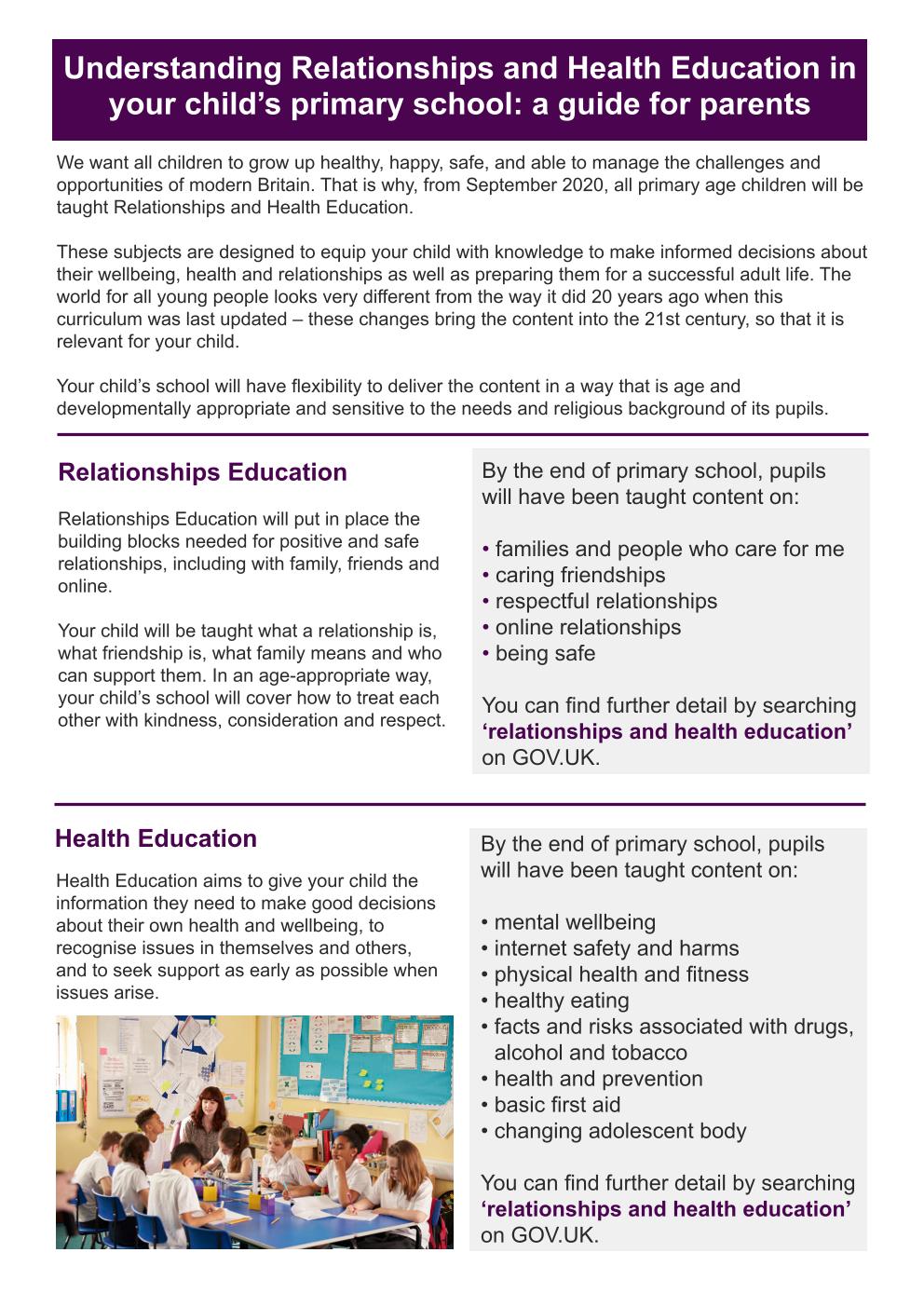
Relationships Education and Health Education are statutory in primary schools. Our provision reflects the Department for Education's revised statutory guidance, effective from September 2026, and is taught in an age-appropriate and developmentally appropriate way.
Our SCARF curriculum
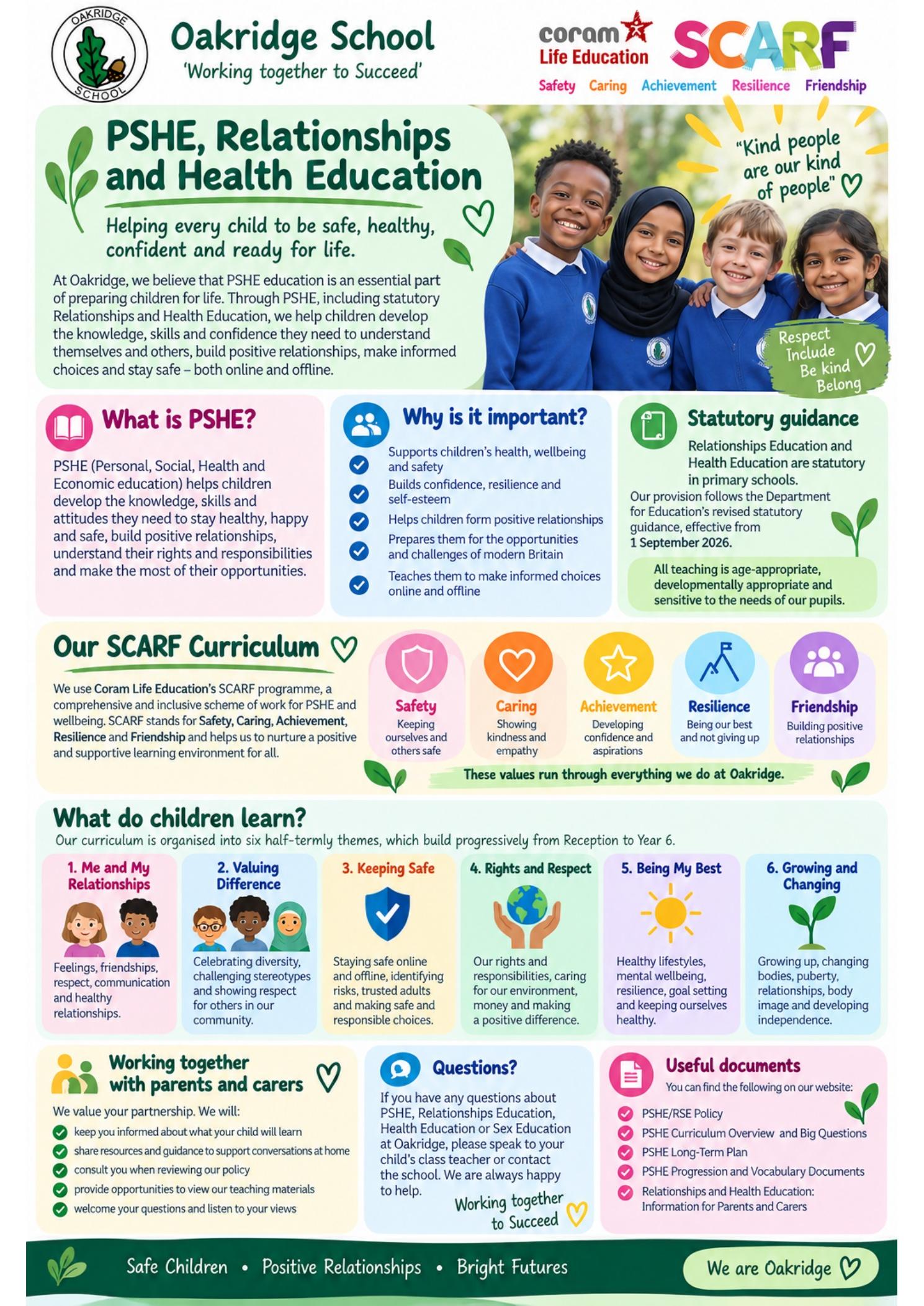
At Oakridge, we use Coram Life Education's SCARF programme as the foundation for our PSHE curriculum.
SCARF stands for:
Safety • Caring • Achievement • Resilience • Friendship
These values complement our own school ethos and support our commitment to helping children feel safe, valued, included and able to succeed.
SCARF provides a carefully sequenced, age-appropriate curriculum from Reception to Year 6. We adapt the programme to reflect the needs of our pupils, our school community and developments in the world in which our children are growing up. Our policy confirms that SCARF is used as a comprehensive programme for PSHE and wellbeing and that teaching is adapted where necessary to meet Oakridge's context.
Our Curriculum
What do children learn?
Our PSHE curriculum is organised into six half-termly themes.
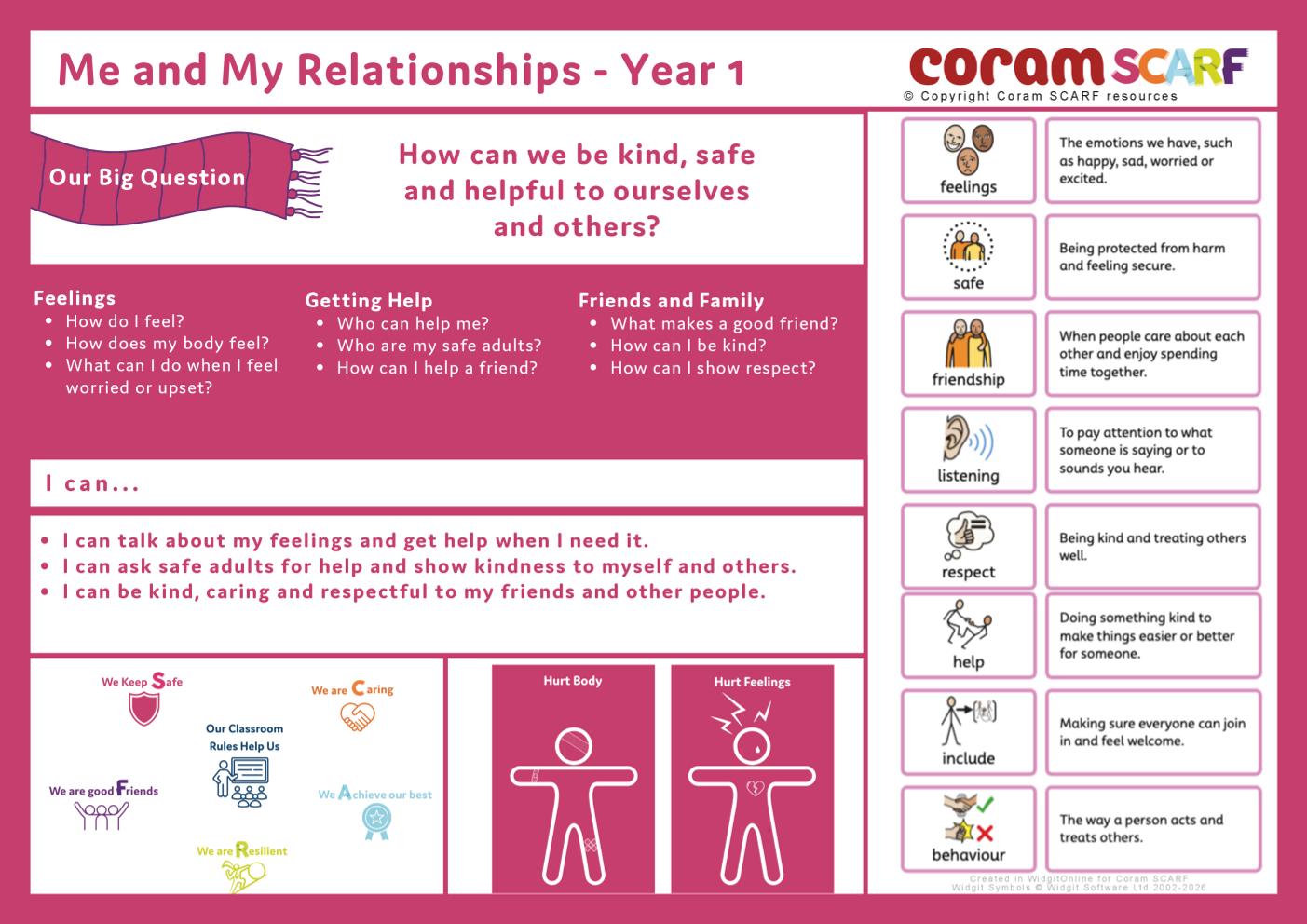
1. Me and My Relationships
Children learn about feelings, friendships, communication and positive relationships.
From developing friendships and recognising trusted adults in the early years, children progressively learn about managing emotions, cooperation, resolving difficulties, assertiveness, boundaries and what makes a relationship healthy and safe.
By Year 6, pupils consider how collaboration, respect, assertiveness and understanding boundaries help them develop positive relationships and keep themselves safe.
2. Valuing Difference
Oakridge is proud to be a diverse and inclusive school.
Children learn to recognise and celebrate similarities and differences, show kindness and respect, understand different families and communities, challenge stereotypes and recognise prejudice and discriminatory behaviour.
Our curriculum helps children understand that people may have different backgrounds, cultures, beliefs, experiences and family structures, while reinforcing that everyone should be treated with dignity and respect.
The revised statutory guidance recognises that families take many forms and expects teaching to reflect this diversity appropriately.
3. Keeping Safe
Keeping children safe is central to our PSHE curriculum.
Children learn how to recognise safe and unsafe situations, identify trusted adults, understand appropriate boundaries and touch, manage risk and know how to ask for help.
As children grow older, this includes increasingly sophisticated learning about:
online safety and online relationships; digital footprints; online bullying; medicines and substances; managing risk; media influence; scams and financial harms; and making safe, responsible decisions online.
Our own curriculum progressively develops online safety and digital literacy from the early years through to Year 6.
The revised statutory guidance also strengthens teaching about online gaming, monetisation, scams, fraud and critically evaluating what children see and read online.
4. Rights and Respect
Children learn that they have rights as well as responsibilities towards other people, their school, their community and the wider world.
Learning includes caring for belongings and the environment, making responsible choices, understanding money, saving and spending, helping others, democracy and contributing positively to the community.
As pupils progress through school they develop increasingly sophisticated financial awareness and critical-thinking skills, helping to prepare them for their future lives.
5. Being My Best
We want every Oakridge child to recognise their strengths, develop resilience and understand how the choices they make can affect their health and wellbeing.
Children learn about healthy eating, exercise, sleep, hygiene, perseverance, goal setting and looking after their physical and emotional health.
As they move through Key Stage 2, children develop greater independence and learn to think critically about influences around them, including media messages and digital content.
Mental wellbeing is an important part of this work. The revised statutory guidance also expects primary pupils to understand that change and loss, including bereavement, can cause different feelings and that people experience grief differently.
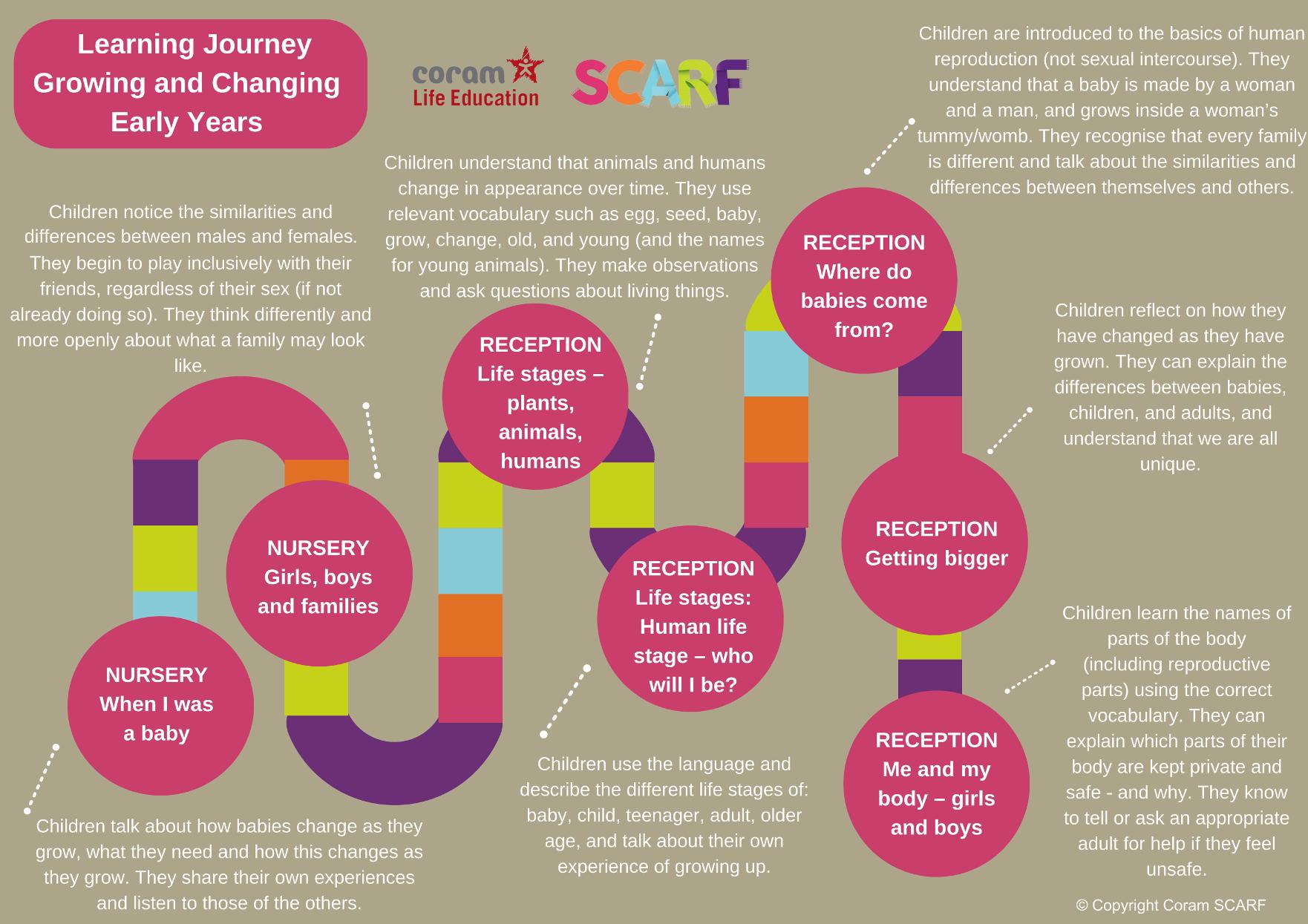
6. Growing and Changing
Children learn that change is a normal part of life.
Learning begins with recognising how we grow and change, understanding feelings, naming body parts appropriately, privacy, body autonomy and knowing when and how to ask for help.
As children become older, learning develops to include puberty, changing bodies, changing emotions, relationships, independence, self-esteem and body image.
Our curriculum builds this knowledge progressively so that pupils are prepared for the physical and emotional changes they may experience as they grow.
Relationships and Sex Education
In primary schools, Relationships Education and Health Education are statutory.
Oakridge also provides age-appropriate Sex Education as part of our wider PSHE programme. This builds upon children's previous learning about relationships, their bodies, puberty and reproduction and helps prepare pupils appropriately for the next stage of their education. Our curriculum currently includes Sex Education within the Year 6 Growing and Changing programme.
Parents and carers cannot withdraw their child from statutory Relationships Education or Health Education, or from relevant content taught through the statutory Science curriculum. Parents do have the right to request withdrawal from non-statutory Sex Education taught by the school.
Further information about what we teach and parents' rights can be found in our PSHE/RSE Policy.
Preparing children for life in a changing world
Children are growing up in a rapidly changing world. Our curriculum therefore goes beyond simply teaching children a set of facts.
We want pupils to learn how to think carefully, recognise risk, question information, make informed choices and know when to seek help.
Our current curriculum includes learning about online relationships and behaviour, digital footprints, critical digital awareness, media manipulation and bias, artificial intelligence and deepfakes, alongside traditional online-safety teaching.
This helps our pupils develop the knowledge and critical-thinking skills they need to navigate modern life safely and responsibly.